
Claude Just Killed the Ads Dashboard. Google Should Be Nervous.
John Ahn
Aeris Editorial
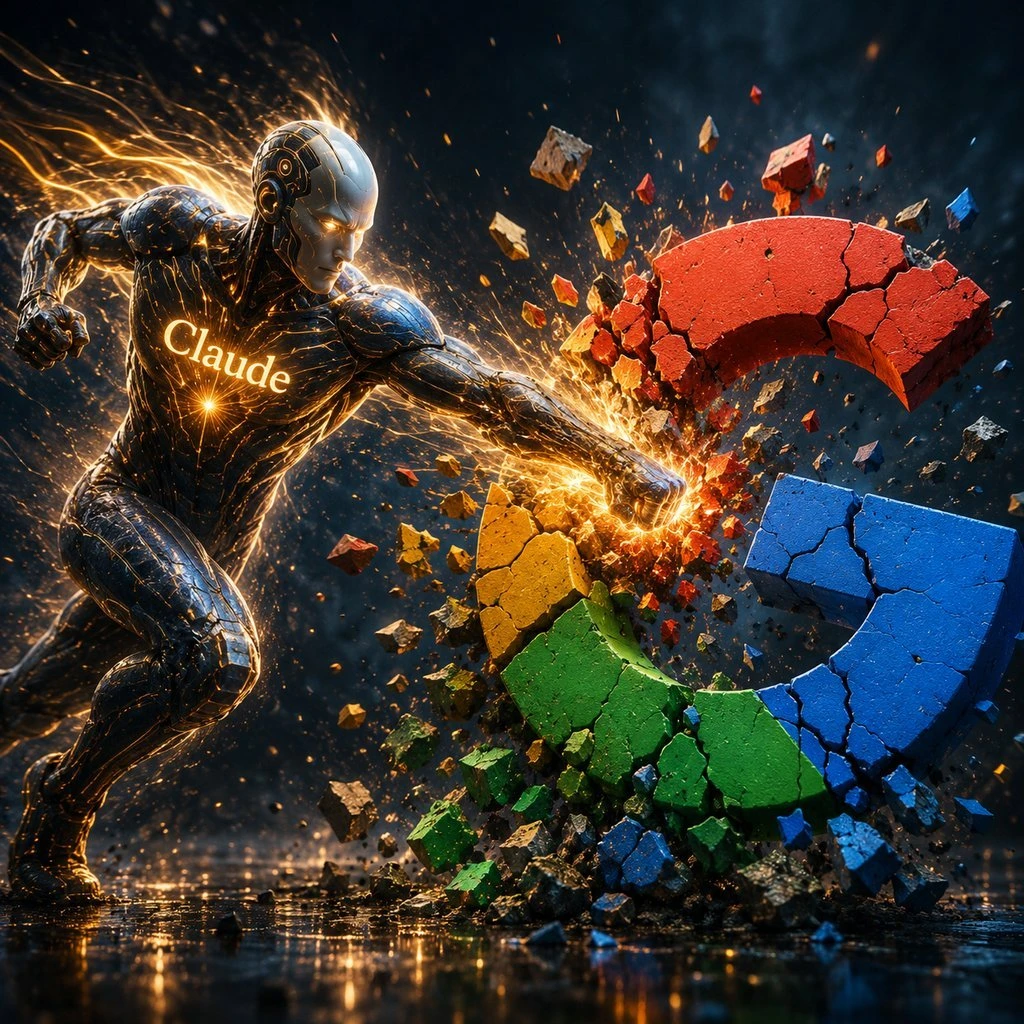
Claude can now connect to your Google and Meta ad accounts and build a full dashboard from one sentence — spend, ROAS, CPA, CTR, live. No analyst. No BI tool. No SQL.
The interesting part isn't that it works. It's what it just made worthless.
The category that just died
For fifteen years, "see your ad performance" was a business model. Dashboards, connectors, reporting seats — billions in software built on one fact: pulling your own numbers was hard. Claude made it free. Overnight, this list became a commodity:
- The BI license — a chat message replaces it
- The Monday reporting meeting — the dashboard answers in real time
- The analyst's first two years — spent building reports nobody read
- The blended Google + Meta view — one prompt, one screen
What Claude can't touch
A dashboard tells you what happened. It cannot tell you what to buy, who to target, or which products will actually convert — because that answer isn't in your ad account. It's in data Google and Meta never gave you:
- What shoppers are searching and comparing right now
- Which SKUs convert at full price — and which only move on discount
- Whether a click became a sale, or a return three weeks later
Claude reads everything inside Ads Manager perfectly. Ads Manager just never held the signal that matters.
Why Google should be nervous
Google and Meta's power was never the dashboard. It was the right to decide what gets optimized — and they decided it should be clicks and impressions, because that's their P&L.
An agent that can read real purchase intent doesn't optimize for traffic. It optimizes for sales. The moment marketers point an AI at conversion instead of clicks, the ad platforms stop being the brain and become a dumb pipe.
But that only works if the AI is fed the right data — and the ad platforms don't own it.
The data is the whole game
This is the layer Aeris is building. Aeris captures all four sides of every sale — consumers, merchants, publishers, creators — so agentic systems optimize for conversion and incremental revenue, not cheaper clicks. First-party shopping intent. SKU-level conversion. Real cross-channel attribution.
Claude building your dashboard is the warm-up act. The main event is an AI that knows what your customer buys next — and spends your budget to make it happen.
By 2027, opening Ads Manager to "check performance" will feel like checking a fax machine.
Frequently asked questions
Q: Did Claude really kill the ads dashboard?
A: It killed the business of building one. Claude connects to Google Ads and Meta Ads via the Model Context Protocol and assembles a live dashboard — spend, ROAS, CPA, CTR — from one prompt. The BI license, the reporting analyst's grunt work, and the Monday dashboard meeting are now a commodity.
Q: Why should Google be nervous about this?
A: Google and Meta's real power was never the dashboard — it was deciding what gets optimized, and they chose clicks and impressions because that's their P&L. Once AI agents optimize for conversion instead of clicks, the ad platforms stop being the brain and become a pipe.
Q: Can Claude actually connect to Google Ads and Meta Ads?
A: Yes — through MCP-based connectors, Claude reads live data from connected accounts and builds reports and dashboards on demand. No SQL, no BI tool, no analyst required.
Q: If reporting is free now, what do marketers compete on?
A: Decisions, not reports. What to buy, who to target, and which products to push toward conversion — none of which an ad-account dashboard can answer, because that data lives outside Ads Manager.
Q: What can't an AI ads dashboard see?
A: Real purchase intent, SKU-level conversion, full-price vs. discount behavior, and post-purchase outcomes like returns. Ad accounts only capture clicks and spend — a smarter answer to the wrong question is still wrong.
Q: What replaces the dashboard?
A: Agentic optimization: AI that allocates budget and targets shoppers toward real sales, powered by a first-party commerce data layer — first-party shopping intent, SKU-level conversion, and cross-channel attribution. This is the layer The Real Group is building.