Agentic Shopping Will Turn Commerce Media Into the Next Marketing Operating System
John Ahn
Aeris Editorial
The next shopper may not be human
The biggest shift in commerce is not another ad format. It is a new buyer interface.
Consumers are already asking AI tools what to buy, where to buy it, which product is better, which store is cheaper, and which option fits their intent. The next step is obvious: agents will not only answer. They will shop.
That changes marketing.
When an AI agent becomes the first layer between the consumer and the market, brands will no longer optimize only for humans scrolling feeds or typing keywords. They will need to optimize for systems that compare products, prices, inventory, reviews, shipping, trust signals, and conversion likelihood in real time.
This is where commerce media becomes the new marketing operating system.
Search was the old interface. Agents are the new one.
For twenty years, digital marketing was built around two interfaces:
- Search engines, where intent was typed
- Social feeds, where demand was created
Agentic shopping creates a third interface: delegated intent.
The user does not browse ten tabs. The user asks:
Find me the best white sneakers under $200 that ship fast and work with wide-leg denim.
The agent then needs structured product data, merchant reliability, pricing, availability, attribution, and conversion signals.
That is not just SEO. That is not just paid media. That is commerce infrastructure.
Commerce media connects demand, supply, and intent
Commerce media sits between brands, retailers, publishers, and shoppers. It turns shopping intent into measurable performance.
In the old model, marketers optimized for impressions, clicks, and last-touch attribution. In the new model, the winning platforms will optimize for conversion probability across the full commerce journey.
That means the system needs to know:
- Which shopper has purchase intent
- Which product is most relevant
- Which retailer can convert the sale
- Which publisher or channel influenced the journey
- Which ad budget should be allocated in real time
- Which signal improves ROAS, CVR, and returning GMV
This is why commerce media matters in the agentic era. Agents need infrastructure. Marketers need measurable outcomes. Retailers need demand. Publishers need monetization.
Commerce media is the layer that can connect all four.
GEO becomes a revenue problem, not just a visibility problem
Generative Engine Optimization is often discussed as a content problem: how do we appear in AI answers?
That is too narrow.
For commerce, GEO is a revenue problem.
If AI agents recommend products, brands need to be readable, comparable, trusted, and transactable by machines. Product feeds, structured data, reviews, pricing, availability, shipping rules, return policies, and merchant performance all become part of the ranking surface.
The question is no longer only:
Can a consumer find us?
The question becomes:
Can an AI agent confidently choose us?
That is a much higher bar.
Marketing will move from campaign management to signal management
Agentic shopping will make weak marketing data painfully obvious.
If your product data is messy, agents will skip you. If your pricing is unclear, agents will compare you poorly. If your attribution is broken, budgets will move elsewhere. If your content does not explain why your product should win, AI systems will summarize your competitors instead.
The marketer's job will shift from launching campaigns to managing signals:
- Product signal
- Price signal
- Availability signal
- Trust signal
- Conversion signal
- Publisher signal
- Customer intent signal
This is exactly the terrain where commerce media networks can compound.
The viral truth: AI agents will not care about your brand story unless it converts
This is the uncomfortable part.
AI agents will not be impressed by a beautiful brand deck. They will evaluate whether your product fits the user's need better than alternatives.
That makes marketing more accountable.
Brand still matters. Creative still matters. But in agentic shopping, brand has to be translated into structured proof:
- Why this product?
- Why this merchant?
- Why this price?
- Why now?
- Why should the agent trust this recommendation?
The winners will be the companies that make their commerce data impossible to ignore.
Commerce media is the bridge
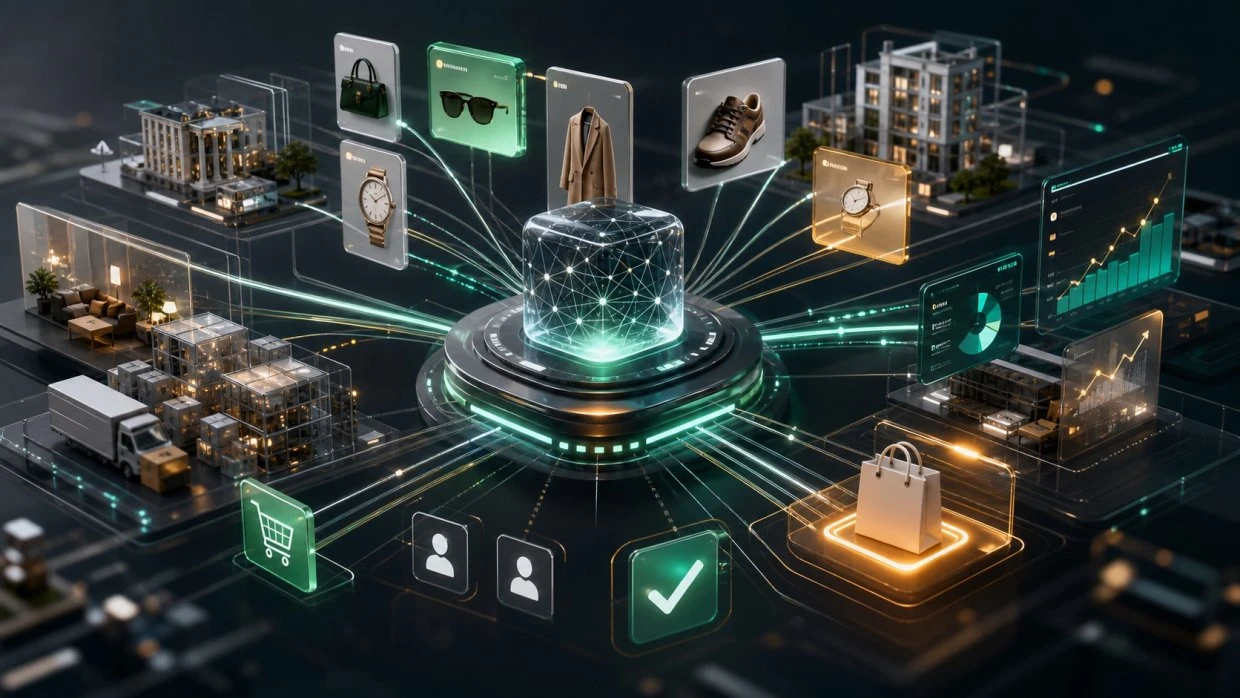
Agentic shopping needs a bridge between AI intent and real-world transactions.
Commerce media can become that bridge by combining:
- High-intent shopping data
- Publisher distribution
- Retailer and merchant feeds
- Performance marketing automation
- Attribution and conversion data
- AI-readable product intelligence
This is bigger than retail media. Retail media is usually retailer-owned inventory. Commerce media can be broader: a network layer across publishers, shoppers, merchants, brands, and AI agents.
That is the opportunity.
The next marketing stack will be built for agents
The future stack will not just ask how many people saw an ad.
It will ask:
- Did the system understand the product?
- Did the agent trust the merchant?
- Did the recommendation convert?
- Did the publisher create measurable demand?
- Did the campaign improve returning GMV?
- Did the data make the next recommendation smarter?
That is where commerce media, agentic shopping, SEO, AEO, and GEO converge.
The old internet was optimized for clicks.
The next internet will be optimized for decisions.
And the companies that own the decision layer will own the next era of marketing.